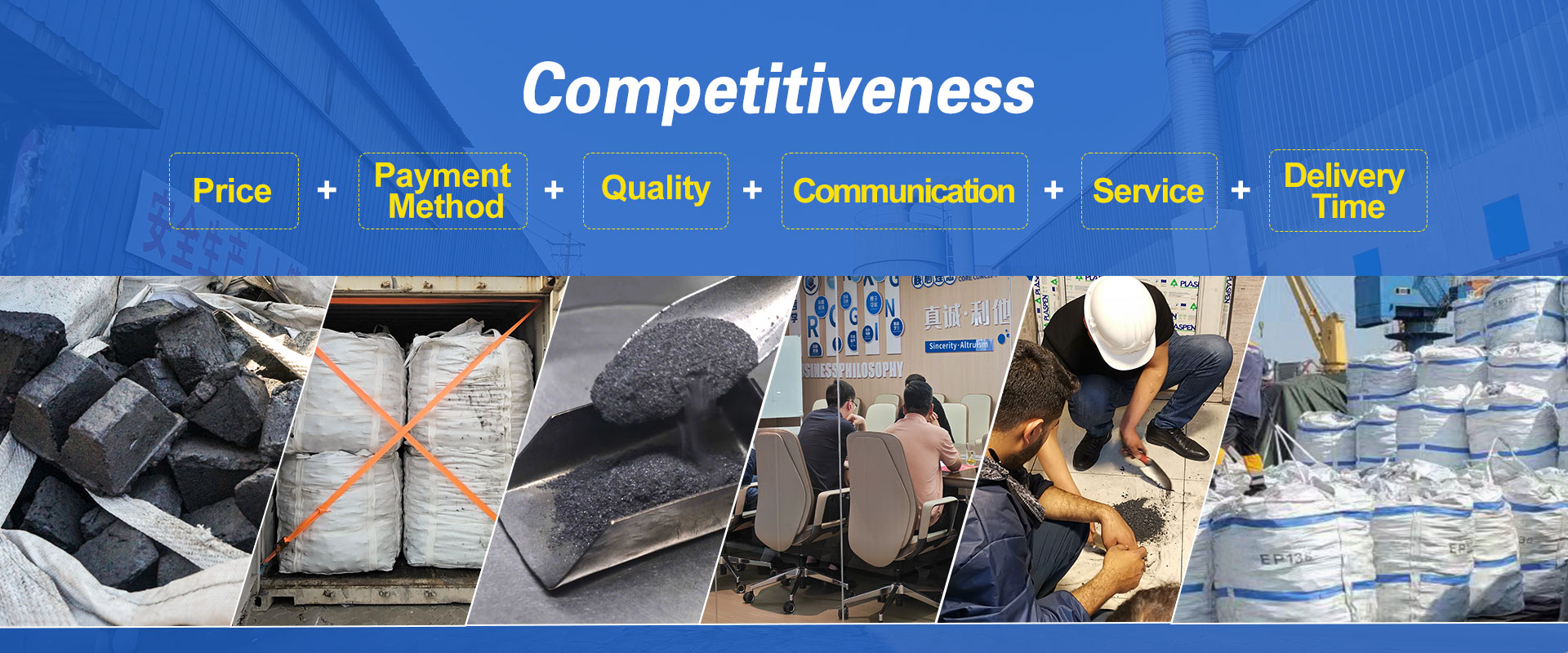
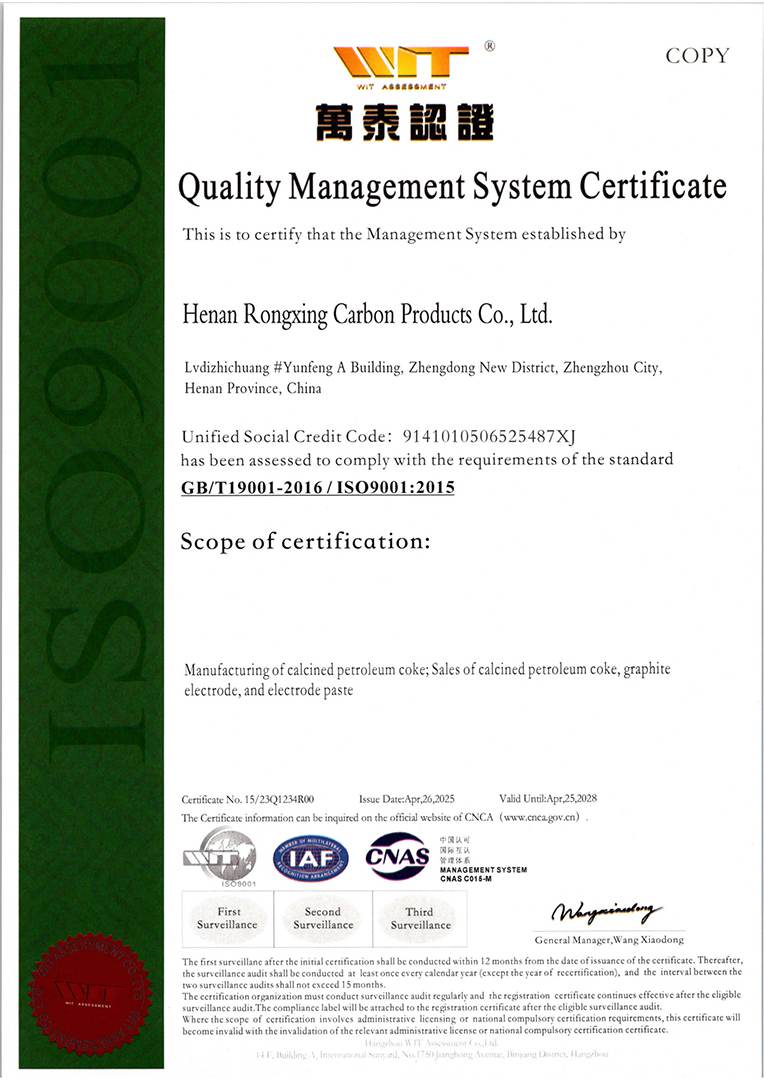
Established in 1992, Rongxing Group has over 30 years of experience in carbon metallurgical materials.
We provide high-performance and cost-effective carbon solutions for global industries.
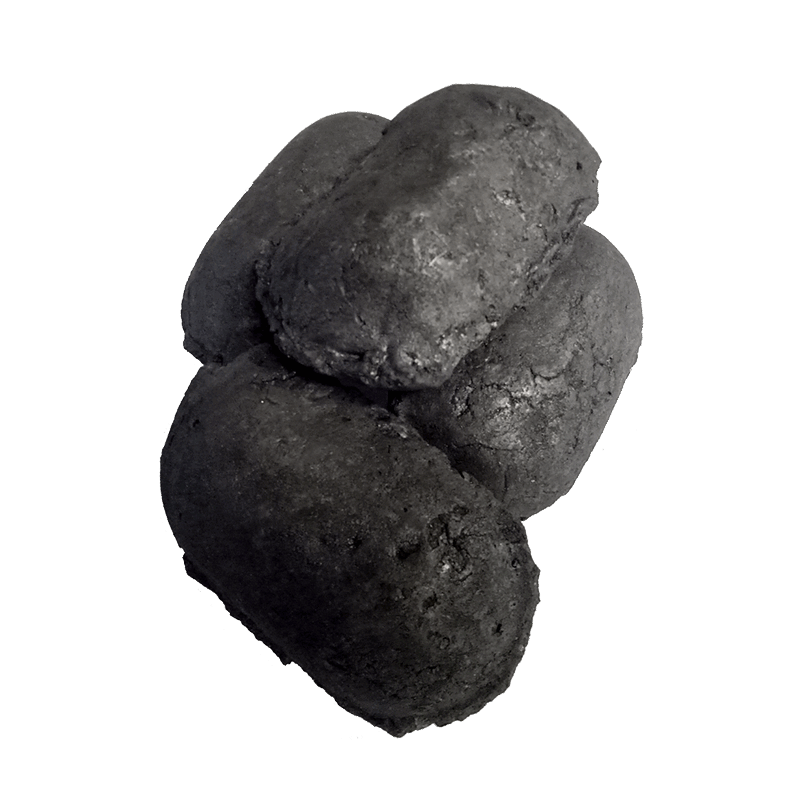
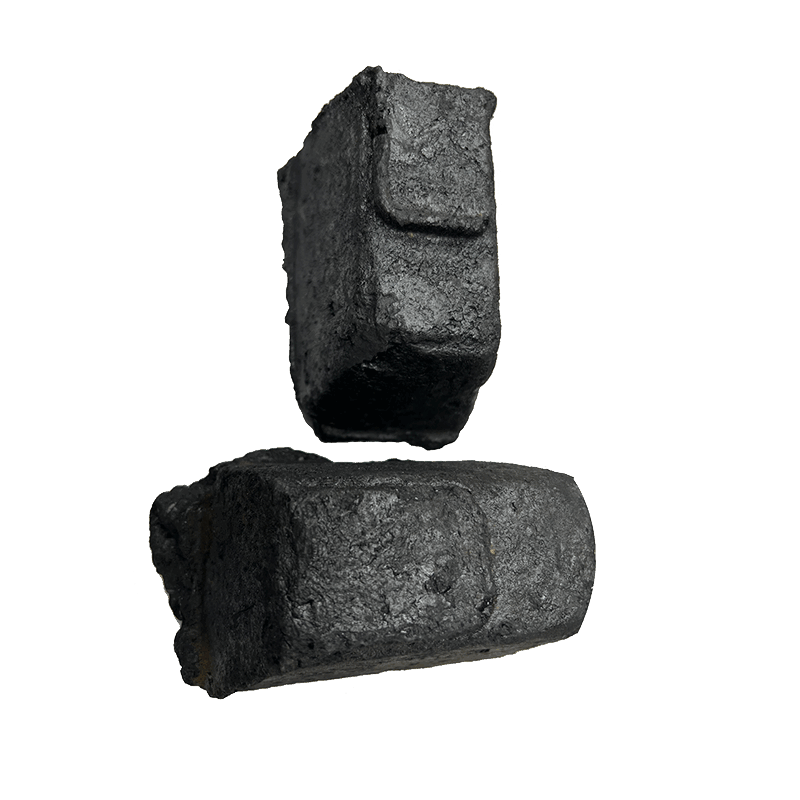
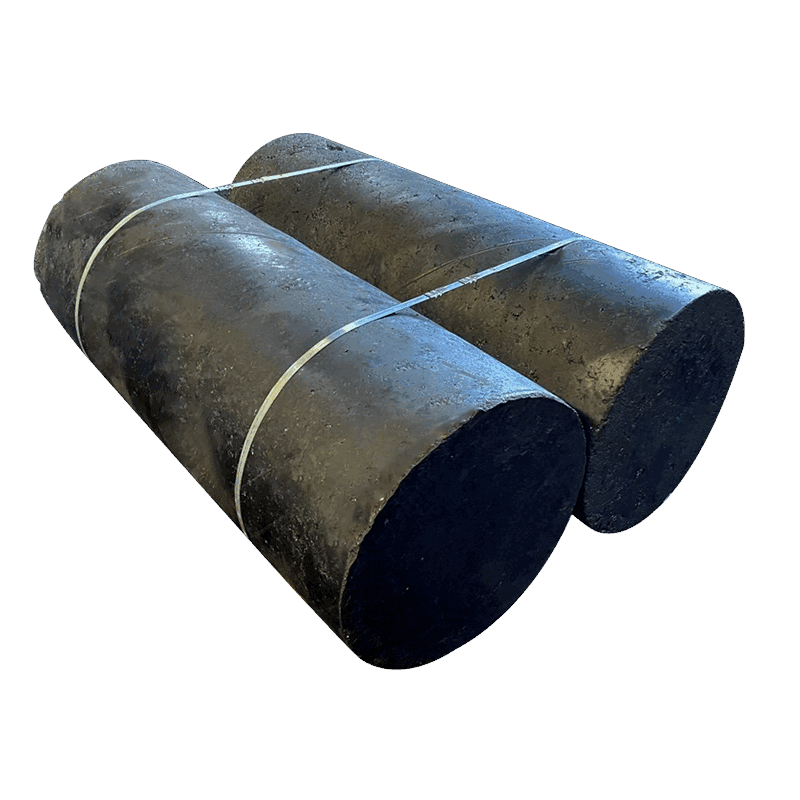
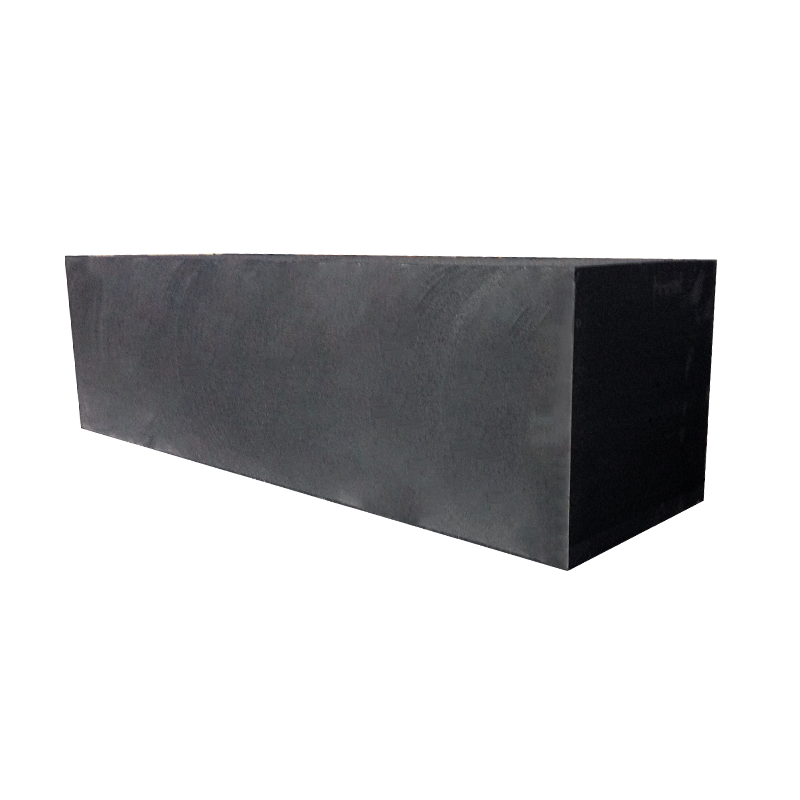
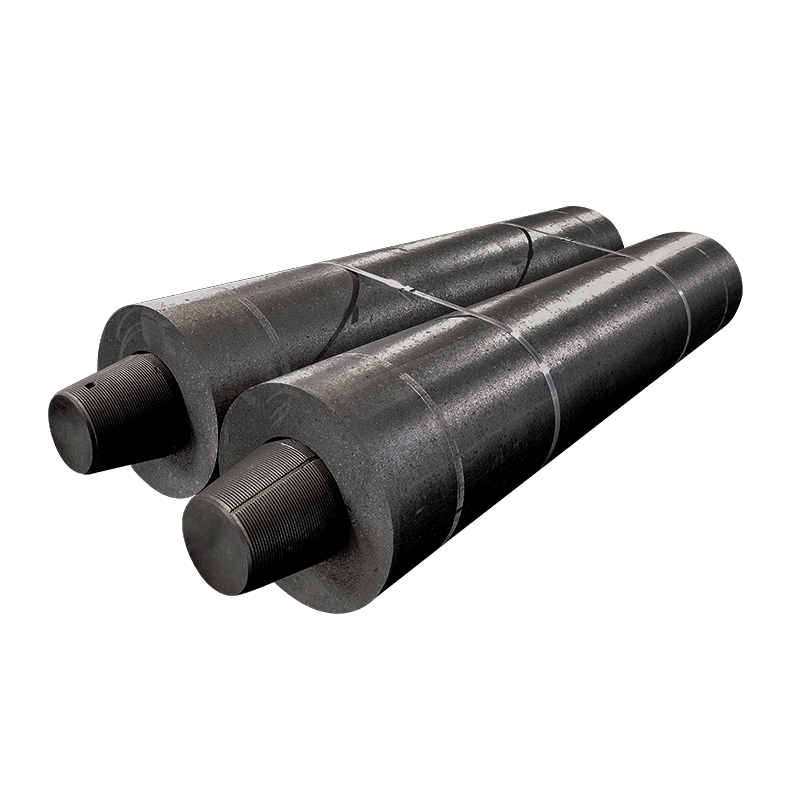
Our products include graphite electrodes, electrode paste, calcined petroleum coke, and blast furnace carbon bricks.
Electrode paste annual capacity reaches 300,000 tons.
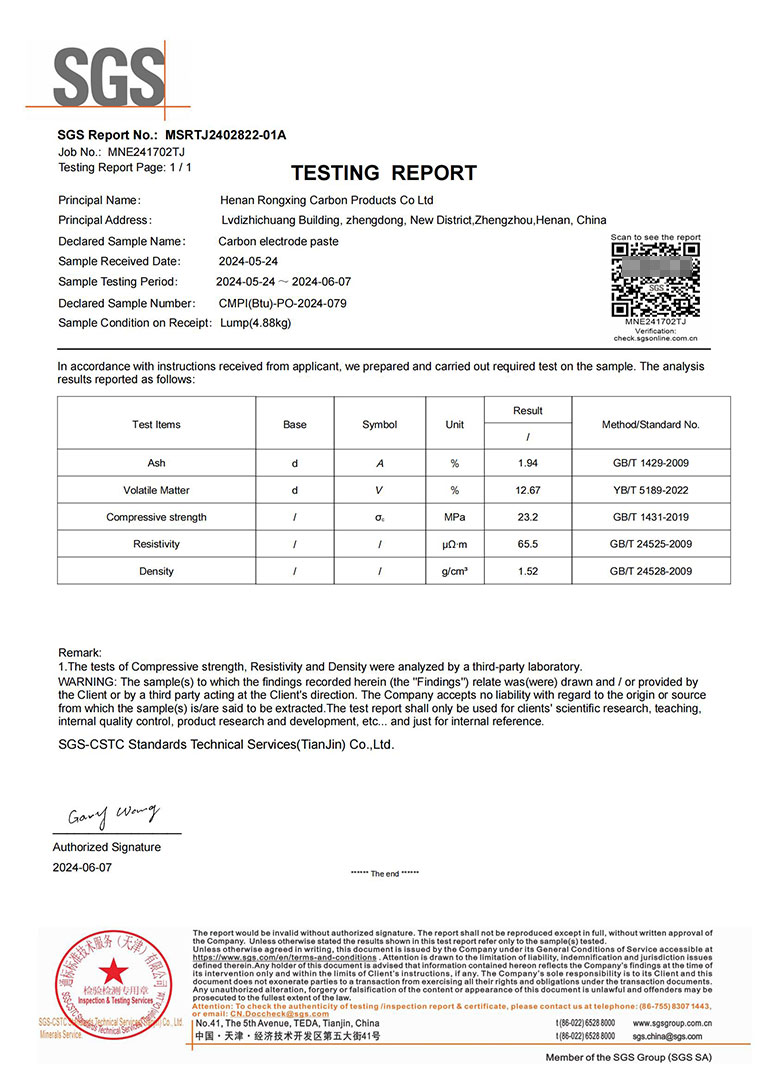
Practical answers based on real furnace operation, raw material matching, electrode paste performance, packaging, and logistics experience.
First, let us correct a common misunderstanding: these three types of furnaces basically do not use electrode paste. They are precisely the typical cases in which "self-baking electrodes cannot be used" — the problem lies not in the size of the furnace but in the extreme sensitivity of the product to carbon and iron.
Electrode paste application boundary;self-baking electrode;iron pickup from the electrode shell;carbon pickup from paste ash;carbon electrode;graphite electrode;industrial silicon grades (553 / 441 / 3303);corundum alumina purity ≥ 99%;carbon-free requirement for yellow phosphorus;carbon vs graphite electrode selection;electrode oxidation thinning and breakage;open vs sealed submerged arc furnace
Self-baking electrodes have two "inherent defects":
① the electrode shell (steel cylinder) moves downward with the electrode and gradually melts into the furnace, bringing in iron;
② the ash in the paste and the carbon material itself enter the product, bringing in carbon and impurities. For products such as ferrosilicon and calcium carbide this does no harm, but for the following products it is fatal.
| Furnace type | Product purity pain point | Consequence of iron / carbon pickup | Actual electrode solution |
|---|---|---|---|
| Industrial silicon furnace | Requires extremely low Fe, Al and Ca (grades such as 553, 441 and 3303 have strict classification limits for iron) | Iron above the limit directly downgrades or even scraps the product | Carbon electrodes, about 70%; the rest are graphite electrodes |
| Yellow phosphorus furnace | Requires no carbon pickup and low ash, so as not to affect phosphorus purity and downstream processing | Carbon entering the burden disturbs the reduction balance | Mainly graphite electrodes (sealed furnaces) |
| Corundum furnace | Extremely high alumina purity requirement (≥ 99%); iron and carbon are both harmful impurities | Coloration, affecting refractory / abrasive performance | Carbon or graphite electrodes (refining furnace) |
| Type | Raw materials and process | Graphitization | Price level | Maximum size | Typical applications |
|---|---|---|---|---|---|
| Electrode (electrode paste) | Anthracite, coke, graphite fines + pitch, baked in the customer's furnace | No | CNY 3,000–5,000/t | Large diameters possible | Ferroalloys, calcium carbide, ferronickel |
| Carbon electrode | Electrically calcined coal, petroleum coke + pitch, formed and then baked (about 30 days) | No | CNY 7,000–15,000/t | φ1400 mm | Industrial silicon (mainstream), yellow phosphorus, corundum, special alloys |
| Graphite electrode | Petroleum coke, needle coke, graphitized at 2,000–3,000 °C | Yes (consumes 4,000+ kWh/t) | CNY 12,500–40,000/t | Normally ≤ φ700–800 mm | Yellow phosphorus (mainstream), small-capacity industrial silicon, refining furnaces |
| Dimension | Industrial silicon furnace | Yellow phosphorus furnace | Corundum furnace |
|---|---|---|---|
| Furnace type | Open submerged arc furnace | Sealed submerged arc electric furnace | Refining furnace / electric arc furnace |
| Electrode form | Mainly carbon electrodes, can be continuously extended | Graphite electrodes, requiring periodic replacement | Graphite / carbon electrodes |
| Electrode consumption | Mainly oxidation and sublimation | Mainly oxidation | Mainly oxidation and breakage |
| Key control | Electrode insertion depth, burden surface permeability | Electrode sealing, moisture prevention and oxidation prevention | Arc stability, prevention of electrode breakage |
| Common faults | Electrode thins through oxidation; electrode breakage | Loose or broken electrode joints | Electrode breakage; block loss contaminating the melt |
Abstract
Calcium carbide (CaC₂) furnaces are the second-largest market for electrode paste. The biggest difference from ferroalloy furnaces is this: here the electrode paste is both a conductor and a reaction raw material. In the reaction CaO + 3C → CaC₂ + CO↑, part of the carbon comes directly from electrode consumption.
Keywords
Electrode paste;calcium carbide (CaC₂) furnace;submerged arc furnace smelting;electrode paste unit consumption;current density red line (7 A/cm²);electrode paste grade selection by furnace capacity;resistivity; ash content;volatile matter;softening point;compressive strength;self-baking electrode soft-break prevention;Rongxing Group customer case (19 kg/t);
Last updated: 2026-11-04Owner: Rongxing Group Technical Team
| Parameter | Typical requirement | Explanation |
|---|---|---|
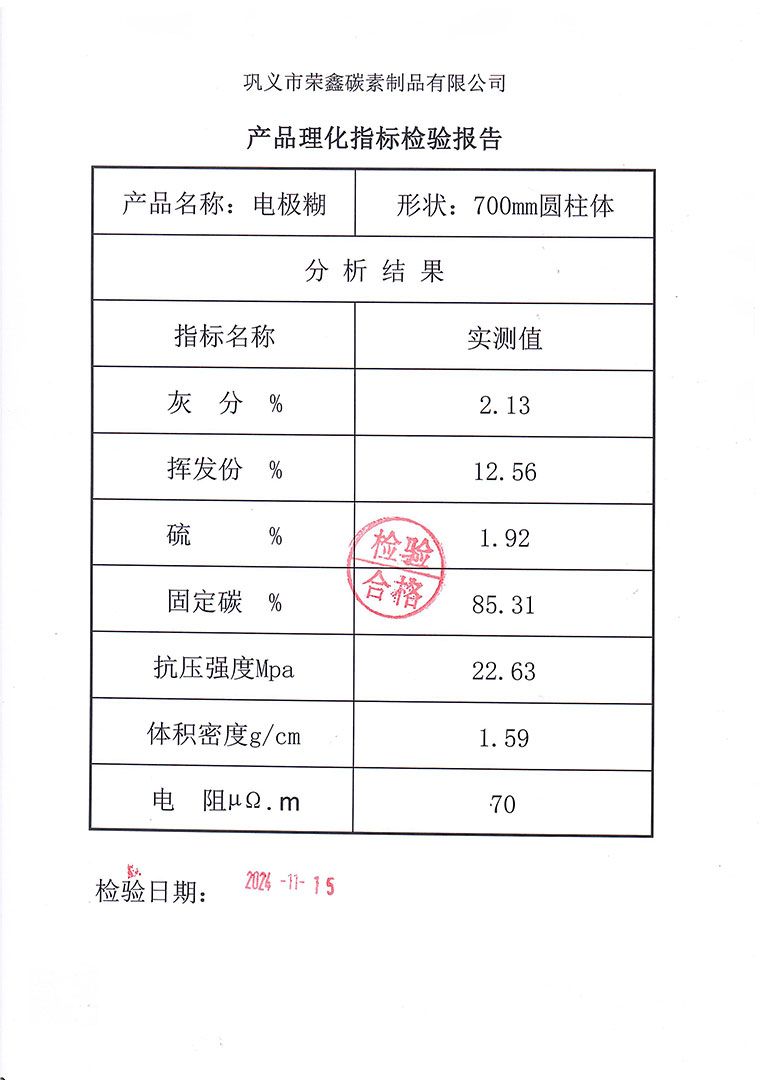
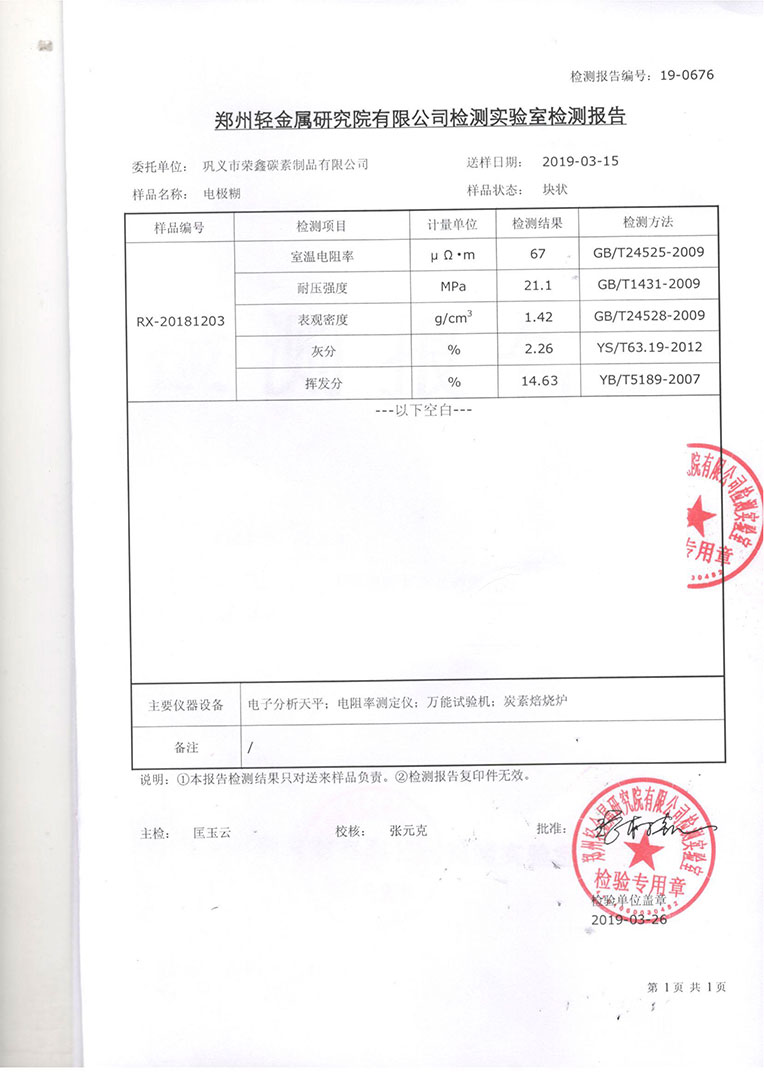
| Resistivity | ≤ 65–75 μΩ·m | Calcium carbide furnaces draw large currents, and resistivity directly determines power consumption |
| Ash content | ≤ 4% | High ash not only increases paste consumption but also affects the gas yield of calcium carbide |
| Volatile matter | 12%–15.5% | Matched to the sintering speed to avoid soft break |
| Compressive strength | ≥ 18–22 MPa | Withstands burden-layer pressure and the impact of burden collapse |
| Bulk density | ≥ 1.40 g/cm³ | Density determines electrical conductivity and oxidation resistance |
| Softening point | 70–110 °C | Must match the electrode descent rate to prevent segregation |
The selection logic for calcium carbide furnaces is strongly correlated with transformer capacity, which is the common industry practice.
| Transformer capacity | Furnace positioning | Recommended paste type | Key indicator target |
|---|---|---|---|
| < 25 MVA | Small and medium-sized calcium carbide furnace | Standard electrode paste | Ash < 4%, resistivity 70–75 μΩ·m |
| 25–40 MVA | Large calcium carbide furnace | High-power type | Ash < 4%, resistivity 65–70 μΩ·m |
| 40 MVA | Extra-large modern furnace | Ultra-high-power type | Ash < 4%, resistivity 60–65 μΩ·m |
Current density red line: when the operating current density exceeds 7 A/cm², a high-end paste with higher thermal stability must be selected. Otherwise the electrode side and tip overheat at the same time, and the rates of oxidation and erosion multiply.
The Cleaner Production Standard — Calcium Carbide Industry lists electrode paste unit consumption as a resource and energy utilization indicator, assessed in three grades.
| Grade | Electrode paste unit consumption (t/t calcium carbide) | Converted to kg/t |
|---|---|---|
| Grade 1 (international advanced) | ≤ 0.020 | ≤ 20 |
| Grade 2 (domestic advanced) | ≤ 0.025 | ≤ 25 |
| Grade 3 (domestic average) | ≤ 0.030 | ≤ 30 |
The common industry estimate is about 30 kg of paste per tonne of calcium carbide; after adopting new technologies such as functionally graded paste, some enterprises have already reduced this to 23–28 kg/t. According to feedback on the results achieved by Rongxin Group customers, a calcium carbide furnace at a customer in Henan can reach a consumption as low as 19 kg.
| Indicator (33 MVA calcium carbide furnace case) | Standard type | High-power type | Difference |
|---|---|---|---|
| Unit price (CNY/t) | 4,500 | 5,200 | +15.6% |
| Daily consumption (t) | 3.2 | 2.7 | -15.6% |
| Power consumption (kWh/t) | 3,250 | 3,100 | -4.6% |
| Monthly comprehensive cost (10,000 CNY) | 58.3 | 52.1 | -10.6% |
Conclusion: the unit price of high-end paste is 15% higher, yet the overall cost is instead 10% lower. Selection should be based on a total cost of ownership (TCO) calculation rather than a comparison of unit prices.
Cracking and block loss (local spalling) occur in the sintering zone (200–600 °C); in essence, they happen when "shrinkage stress + thermal stress + gravity" exceed the sintering strength of the paste body. The two are often mutually causal: cracks come first, then block loss; after block loss the electrode becomes thinner, which in turn intensifies current concentration and thermal shock.
Keywords|electrode paste cracking、sintering zone、shrinkage stress、segregation、volatile matter、pitch softening point、paste column fluctuation、cylindrical paste、sealed ferrochrome furnace
Last updated: 2026-11-02 · Owner: Rongxing Group Technical Team
| Category | Specific cause | Manifestation | Adjustment measure |
| Formulation | Volatile matter too low (<12%), fast sintering shrinkage and low bulk density | Cracks regularly distributed in a circumferential (ring) pattern; loose fracture surface | Require the supplier to raise the volatile matter to 13%–17% and increase the pitch proportion |
| Unreasonable particle size composition, too many coarse particles, severe segregation | Block loss mostly occurs on one side of the electrode (the gravity-segregation side) | Switch to cylindrical / elliptical paste to reduce segregation; check the grading sheet | |
| Pitch softening point too high, delayed sintering and insufficient coking | The sintering zone moves downward and a thick "half-baked" layer forms on the surface | Replace with a medium-temperature pitch formulation with a softening point of 85–105 °C | |
| Poor thermal stability of the aggregate (raw ore coke, low-quality anthracite) | Overall strength decline after running for some time | Require the use of electrically calcined anthracite / calcined petroleum coke, and request the aggregate analysis sheet | |
| Operation | Slipping too fast, large fluctuations of the paste column | Cracks appear periodically following the slipping cycle | Implement "less per slip, slip more often", and cut power for balancing after slipping |
| Cooling system failure, steep temperature gradient | Cracks accompanied by overheating of the shell wall | Repair the water / air cooling and control the length of the softening section | |
| Frequent large fluctuations of current / load (thermal shock) | Radial cracks, with oxidized colors on the fracture surface | Stabilize the rate of load increase and decrease, and avoid shocks from frequent power-off / power-on |
According to the experience data of Rongxing Group: after a sealed ferrochrome furnace replaced block paste with cylindrical paste, the circumferential cracking caused by segregation was significantly reduced — at a 75 MVA furnace, the measured ash content difference between the upper and lower parts of the same batch of paste narrowed from 3.65% to 2.07%, and the true density difference narrowed from 1.816 to 1.984, with the electrode accident rate decreasing accordingly.
Ferrosilicon (FeSi) is the most typical slag-free smelting grade; 72# (about 72% Si) and 75# (about 75% Si) are the mainstream grades in China. The core contradiction in electrode management for ferrosilicon furnaces is not "under-baking" but "baking too fast and oxidizing too severely".
Keywords|Ferrosilicon (FeSi);slag-free smelting;electrode oxidation;oxidation resistance;electrode slipping;burden surface management;arc exposure;72# / 75# grades;electrode paste unit consumption;three-phase current balance
Last updated: 2026-10-30·Owner: Rongxing Group Technical Team
| Characteristic | Impact on the electrode | Response direction |
| Slag-free smelting | No slag layer covers the burden surface, so the upper part of the electrode is exposed to high-temperature furnace gas | Strengthen burden surface maintenance (a problem that arises in open furnaces) to isolate air ingress as far as possible |
| Deep electrode insertion | The working end is buried in the burden layer, so the tip temperature is high and consumption is concentrated | Maintain a reasonable insertion depth and avoid "arc exposure" |
| High furnace mouth temperature | The side of the electrode oxidizes quickly and its diameter gradually thins | Improve the furnace-platform operating conditions and keep the electrode properly submerged in the arc |
| Carbon does not take part in the main reaction | Chemical consumption is lower than in silicomanganese, but mechanical and oxidation consumption account for a higher share | Focus on improving strength and oxidation resistance rather than simply raising the sintering speed |
The general industry benchmark is that producing 1 tonne of ferrosilicon containing 75% silicon consumes about 45 kg of electrode paste. Actual values, however, vary greatly with furnace capacity and operating level: the common domestic operating range is 25–45 kg/t, and a well-managed large furnace can approach 30 kg/t or even lower.
| Influencing factor | Direction | Explanation |
| Ash content of electrode paste | Ash ↑ → unit consumption ↑ | Ash takes part in slag formation and accelerates tip consumption |
| Oxidation resistance | Oxidation resistance ↑ → unit consumption ↓ | Graphite fines and low porosity can slow side oxidation |
| Electrode insertion depth | Too shallow → unit consumption ↑ | Arc exposure causes simultaneous high-temperature oxidation of the tip and the side |
| Burden surface management | Burden surface collapse → unit consumption ↑ | The impact of a collapse causes block loss and breakage |
| Secondary current | Too high → unit consumption ↑ | Higher current density means faster tip erosion |
"Stability" comes first: ferrosilicon furnaces dislike frequent adjustments. The unbalance of the three-phase current should be controlled within 5%; the burden surface should be kept "flat, full and loose", avoiding "sparking" (local arc exposure) and large burden collapses.
Matching electrode slipping with sintering: the electrode consumption rate of ferrosilicon furnaces is moderate, so the "small amount, many times" slipping principle should be followed. Each slip should preferably not exceed 100–150 mm, and after slipping one should observe for 2 h before deciding on the next slip. The daily slipping amount can serve as an indirect monitoring indicator of unit consumption.
| Grade | Silicon content | Smelting difficulty | Focus of electrode management |
| 72# | About 72% | Relatively easy, with a slightly lower furnace temperature | Control oxidation and stabilize the burden surface |
| 75# | About 75% | Higher furnace temperature and more severe electrode erosion | Strengthen oxidation resistance and strength; unit consumption is usually higher than that of 72# |
High-carbon ferrochrome (HCFeCr) is the grade that most "tests the formulator's skill" in electrode paste applications. There is only one reason: large ferrochrome furnaces are generally fully sealed, with almost no radiant or conductive heat, so resistance heat is the only heat source left for baking the electrode paste. This compresses the fault-tolerance margin of formulation design to an extremely narrow range.
Keywords|High-carbon ferrochrome (HCFeCr);fully sealed submerged arc furnace;resistance heat;current density; baking speed;ash content;compressive strength after baking;anti-segregation;cylindrical electrode paste;electrode paste unit consumption;furnace condition control
Last updated: 2026-10-30·Owner: Rongxing Group Technical Team
| Requirement | Specific target | Reason — why it is needed |
| Faster baking speed | Softening point at the lower limit (about 70–90 °C); volatile matter at the middle-to-lower limit (11–12.5%) | The internal pressure and temperature of a sealed furnace are stable, while radiant and conductive heat are almost zero, so the paste must be made "easier to bake"; otherwise it remains under-baked |
| Lower ash content | Ash ≤ 4% | High ash accelerates electrode consumption and shortens the baking residence time; it also contaminates the alloy |
| Higher strength after baking | Compressive strength ≥ 20–22 MPa, with the thermal expansion coefficient controlled | Electrode paste with higher compressive strength can better withstand electrode accidents caused by burden impact, furnace-platform vibration and similar factors |
| Anti-segregation capability | A reasonable particle size distribution to optimize the electrode paste structure | Maintaining a proper paste consistency is more conducive to the structural density of the electrode after sintering and forming |
① Ensure that the formulation used in electrode paste production is reasonable, and maintain a proper paste consistency;
② extend the kneading time to improve uniformity;
③ appropriately increase the pitch content and fluidity;
④ modify the ribs of the electrode shell to improve temperature uniformity inside and outside the electrode.
| Item | Reference value |
| Electrode paste unit consumption, high-carbon ferrochrome furnace | About 18 kg/t (advanced level after optimization: 15–17 kg/t) |
| Medium- and low-carbon ferrochrome furnace | About 19 kg/t (refining furnace; mostly uses graphite or carbon electrodes, and unit consumption is higher where paste is used) |
| Safe current of the electrode shell | Must be strictly calculated; exceeding the limit will burn out the electrode shell below the "large sleeve", destroying protection and baking |
| Power restoration after an outage | Never raise the load quickly; restore in stages according to the outage duration to avoid hard break caused by thermal stress |
Silicon-manganese alloy (SiMn) is one of the ferroalloy grades with the largest output in China, and it is also the smelting grade with a relatively high unit consumption of electrode paste and the most concentrated electrode accidents. Understanding electrode management of SiMn furnaces is the starting point for mastering the on-site application of electrode paste.
Keywords|Electrode paste, Silicon-manganese alloy, Submerged arc furnace
Last updated: 2026-10-29·Owner: Rongxing Group Technical Team
SiMn smelting is a reduction-smelting process intermediate between the slag-forming and slag-free methods, in which the reductant (coke) in the furnace participates extensively in the reactions. The electrode not only conducts electric current; the carbon at its tip also takes part directly in the reduction of metal oxides, forming "chemical consumption". Industry statistics show that the electrode consumption rate of SiMn furnaces is about 1.2 times that of ordinary ferromanganese furnaces.
| 01 | Paste type selection: Use standard electrode paste or high-strength paste for semi-enclosed furnaces, and sealed paste for closed furnaces. For SiMn furnaces, grades with volatile matter in the upper-middle range (13%–15.5%) and ash content ≤ 4% are recommended, so as to balance sintering speed and strength. |
| 02 | Paste column height: A proper paste column is the key to ensuring electrode strength. The paste column height is recommended to be controlled at 3–3.5 times the electrode diameter. If the column is too high, coarse and fine particles will segregate; if it is too low, the column pressure will be insufficient and the packing will not be dense, resulting in a porous electrode that breaks easily. The paste column height should be adapted to the furnace conditions under different ambient temperatures and production situations. |
| 03 | Example: As of October 22, 2026, paste suspension had already occurred in the Inner Mongolia region when the column was raised to 3.5 m, whereas in the Guangxi region even 5 m caused no problem; the lower the paste column, the lower the strength. |
| 04 | Current density and slipping rhythm: The working current density of self-baking (Söderberg) electrodes is generally 4.5–10 A/cm². SiMn furnaces should operate at a lower voltage and a higher current to reduce side oxidation of the electrodes; slipping should follow the "small amount, many times" principle, to avoid a single overly long slip disturbing the sintering zone. |
| Problem | Typical symptom | Causes (in order of priority) | Treatment |
| Electrode soft break | The electrode below the copper contact clamps softens, bends and breaks, and paste flows out | ① Slipping too fast so that sintering cannot keep up; ② Volatile matter too high and softening point too high; ③ Main factor: mismatch between the electrode paste specifications and the furnace | Cut off power immediately and cool with full air flow; after the fracture is reset, clamp the copper clamps and restore power slowly; reduce the load below 30% and then recover step by step |
| Electrode hard break | Transverse fracture of the already-sintered section with a flat fracture surface | ① High ash content and insufficient strength; ② Segregation of coarse and fine particles; ③ Rapid cooling and heating after a hot shutdown | Remove the broken end and roast it by "dead-phase" baking for about 6 h; or let the broken end "sit" in the furnace burden and be consumed gradually; insulate the exposed section during shutdown |
| Paste suspension | The paste column height does not drop for a long time and the electrode becomes an "empty shell" | ① Softening point too high; ② Unreasonable paste column height | Tap the electrode or poke the paste down with a steel bar |
| Abnormal electrode consumption | Daily slipping amount is significantly higher than that of similar furnaces | Main cause: the electrode paste specifications do not match | Analyze the ash content and electrical resistivity; select electrode paste specifications suitable for the furnace |
| Uneven (eccentric) electrode burning | Severe side erosion of a single-phase electrode | Unbalanced three-phase current and inclined burden surface; the cylinder clamp being too tight or too loose; the position of the flue and the designed height of the flue | Keep the three-phase load relatively balanced; level the burden surface; regularly check the equipment that relatively affects the sintering speed |
Based on our experience, bottom carbon buildup in Middle East furnaces is mostly caused by insufficient reducing-agent activity. To solve it fundamentally, reduce raw coal and coke usage while increasing semi-coke usage. High-current and low-voltage operation can temporarily reduce carbon buildup.
Compared with domestic chrome ore smelting, this type of burden makes the molten iron more fluid and increases electrode erosion. Therefore, the electrode needs better oxidation resistance, and the electrode paste formula should be adjusted accordingly.
Freezing of cylindrical electrode paste in Russia was mainly related to the old water-cooling process, where moisture entered the cylinder during cooling. Our current process uses natural drying, so the electrode paste no longer contains water.
Frequent shutdowns require electrode paste with better thermal shock resistance. Poor thermal shock resistance can cause electrode tip loss or breakage during heating. Peak-shaving production requires higher-quality electrode paste than continuous operation, including larger residual anode blocks, more electrically calcined coal, and more graphite powder.


 Phone:+86 19937179450
 Whatsapp:+86 19937179450
 Email:[email protected]
 Add:Zhengdong New District,Zhengzhou City,China.