Why does ash content affect electrode consumption?
Electrode paste is used for self-baking electrodes, it gradually heats up, bakes, and solidifies within a submerged arc furnace, ultimately forming a conductive carbon electrode body. Ash consists of inorganic residues remaining after calcination at 850–870°C. These substances do not contribute to electrical conductivity or reduction reactions, nor do they form part of the carbon matrix.
The carbon matrix is what provides electrical conductivity and thermal shock resistance (such as ECA, calcined petroleum coke and graphite powder). If the ash content is high, the proportion of effective carbon components within a given weight of electrode paste decreases. Consequently, as the electrode is consumed, the electrode paste with higher ash content yields less effective carbon electrode material. To maintain an electrode of the same length and cross-sectional area, more paste must be added, leading to an increase in electrode consumption per ton of product.
In terms of structural densification, ash content prevents the formation of a continuous, bonded carbon skeleton, which is a feature otherwise achieved with pitch. Electrodes areas with high ash content exhibit increased porosity and lower strength after sintering. Oxygen can penetrate the interior through these pores, shifting the oxidation process from simple surface erosion to volumetric degradation, this often leads to spalling and even hard breakage. The emergency furnace shutdowns necessitated by hard breakage typically result in a greater increase in electrode consumption than the losses incurred from routine operational wear.
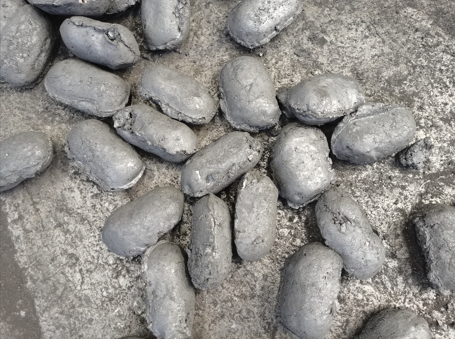
Electrode paste with low ash content features a high-purity, dense, and uniform carbon skeleton, offering superior oxidation resistance and greater structural strength. In this case, electrode consumption occurs primarily through steady vaporization via the electric arc, while abnormal losses (such as spalling or oxidation) are effectively suppressed. Consequently, the specific consumption of the electrode decreases under standard power consumption conditions.
However, a lower ash content is not necessarily better, excessively low levels can lead to soaring costs and degraded sintering performance, which may actually increase consumption. Therefore, it should be within an optimal range and match the specific furnace, a lower ash content in electrode paste generally results in lower electrode consumption per ton of ferroalloy produced, while simultaneously benefiting both the ferroalloy grade and power consumption efficiency.


 Phone:+86 19937179450
 Whatsapp:+86 19937179450
 Email:
 Add:Zhengdong New District,Zhengzhou City,China.