The Roles of Calcined Petroleum Coke (CPC) and Graphite Scrap in Electrode Paste
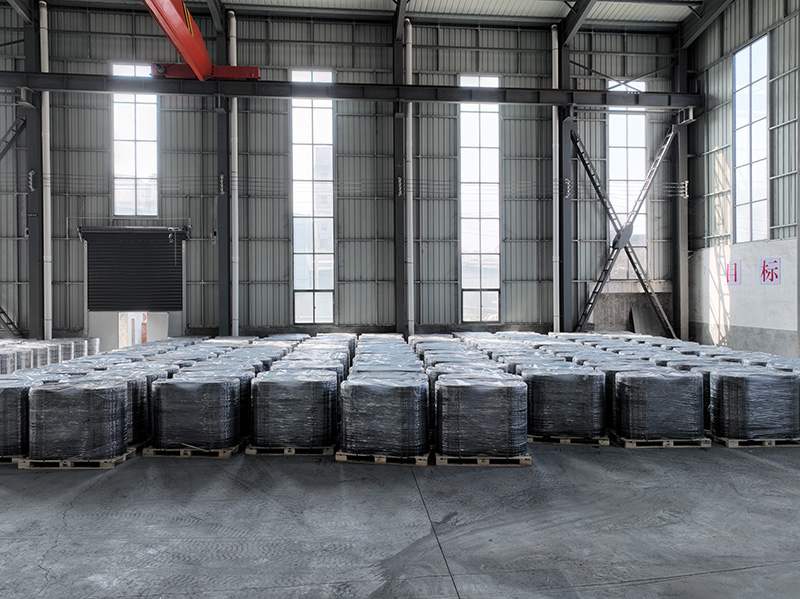
Both materials serve as conductive aggregates, yet they possess fundamentally different carbon structures, leading to distinct roles within electrode paste.
Calcined petroleum coke (CPC) is produced by heating green petroleum coke to 1200–1300°C. This process involves calcination but not graphitization, resulting in a disordered carbon structure. Its functions include:
It offers superior compressive and flexural strength after baking compared to graphite scrap, compensating for the limitations of electrically calcined anthracite (ECA) and enhancing the electrode's resistance to hard breakage.
Its electrical resistivity is lower than that of ECA but significantly higher than that of graphite scrap.
It is more easily wetted by pitch, ensuring strong bonding during the baking process, uniform sintering of the electrode paste, and reduced risk of delamination or spalling.
When combined with ECA and fine powders, it fills the voids between aggregates, thereby increasing the density of the baked electrode.
Graphite scrap is derived from crushed waste graphite electrodes. Having undergone graphitization at approximately 2800°C, the carbon exists in an ordered crystalline graphite structure. Its functions include:
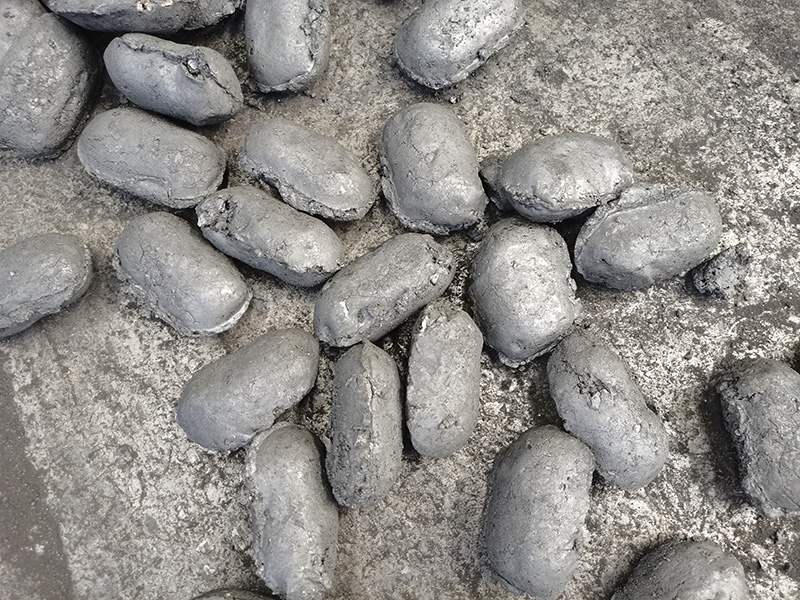
Significantly reducing electrical resistivity after baking and enhancing electrical conductivity, they serve as the primary low-resistance component.
Providing high thermal conductivity, which accelerates the self-baking/sintering process of the electrode. This is ideal for use in enclosed submerged-arc furnaces and high-current operating conditions.
Offering a low coefficient of thermal expansion, which improves thermal shock stability and mitigates cracking caused by thermal shock.
Providing good particle lubricity, which improves the flowability of the paste during the kneading process.
Calcined Petroleum Coke (CPC) determines whether an electrode is sufficiently robust and whether it burns cleanly, while graphite scrap dictates the efficiency of its electrical and thermal conductivity.
In standard electrode paste (used for open-type small furnaces), graphite scrap may be used sparingly or omitted entirely. However, it is virtually a standard component in formulations for closed-type paste and large-scale submerged-arc furnaces. Only by balancing these two ingredients in the correct proportions can one effectively prevent the two major types of electrode failure: soft breakage and hard breakage.
PREVIOUS:Binders Used in the Manufacture of Electrode Paste
NEXT:There is no more content!


 Phone:+86 19937179450
 Whatsapp:+86 19937179450
 Email:
 Add:Zhengdong New District,Zhengzhou City,China.