Solid Carbonaceous Raw Materials for Electrode Paste Production
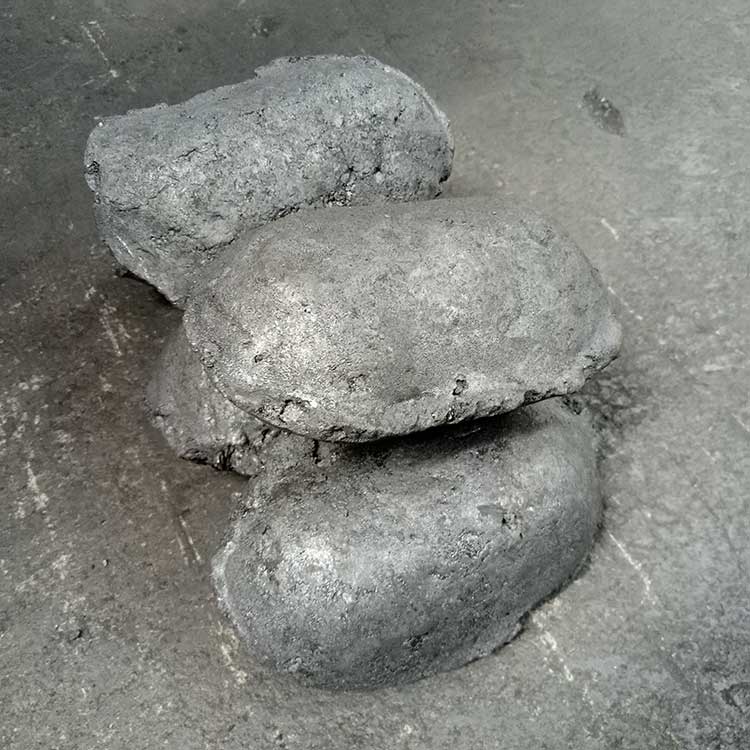
I. Solid Carbonaceous Raw Materials
01 1. Anthracite
Anthracite is the main component of electrode paste. After the electrode is baked, it becomes the skeleton of the electrode, playing a role similar to that of pebbles in reinforced concrete.
Anthracite is used not only because it is inexpensive, but more importantly because it improves the service quality of electrode paste. Anthracite is a dense, black, greasy mineral with a metallic luster. It differs from other coal deposits in that it has a high carbon content, high mechanical strength, and low volatile matter. Anthracite contains only a small amount of ash, which is uniformly distributed within the carbon and exists essentially as minerals in thin layers and spots.
The ash content of anthracite used for electrode paste production is generally no more than 10%. Therefore, after sorting upon arrival at the plant, the ash content is generally stabilized below 8%. When the coal is in sheet-like or elongated lumps, it tends to break into flakes during heating and calcination due to thermal spalling.
During calcination, the shrinkage of anthracite is linearly related to the amount of volatile matter. Therefore, the anthracite used for electrode paste production should contain low volatile matter, preferably less than 7%.
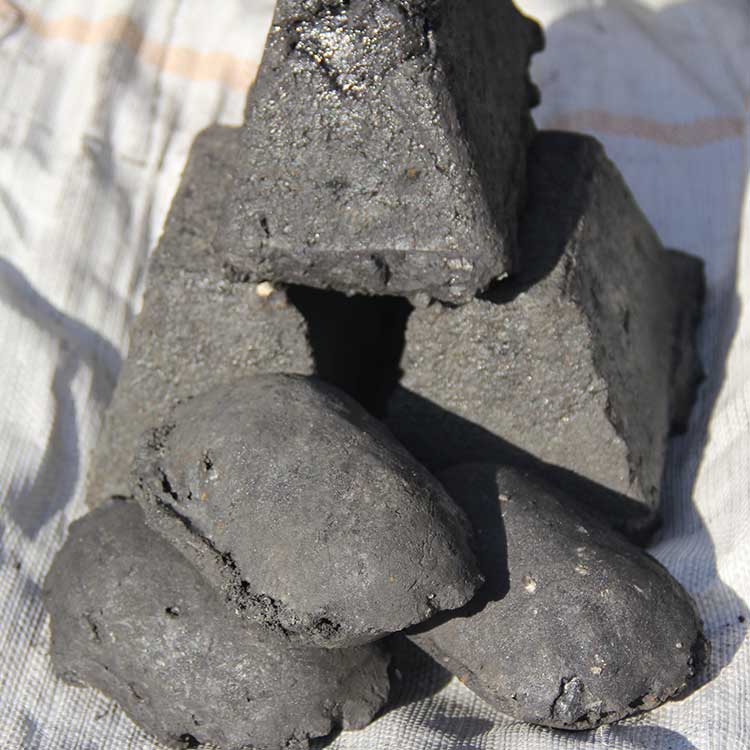
02 2. Coke
Coke is one of the most important raw materials for producing electrode paste, especially for producing graphitized electrodes. The most valuable coke is low-ash coke, sometimes called ash-free coke, with an ash content not exceeding 1%. These cokes include petroleum coke and pitch coke. The first is coke obtained by coking petroleum residue, and the second is coke produced from coal pitch in chemical coking industrial furnaces.
Petroleum coke is a solid carbonaceous product obtained by high-temperature treatment of petroleum residue.
Due to differences in raw materials and manufacturing methods, the compositions of these products also differ. At present, there appear to be two types of petroleum coke with different properties: one is batch coke, and the other is delayed coking petroleum coke. The former contains 3–7% volatile matter, while the latter contains up to 10–18% volatile matter.
Pitch coke is the residue obtained by coking coal pitch in coke ovens similar to those used for coal coking, with a volatile matter content of only 0.8–1%. It is generally mixed with petroleum coke and calcined for production.
03 3. Artificial Graphite
According to research and practice, adding artificial graphite with an ash content not exceeding 1% to electrode paste can increase the electrical conductivity, thermal conductivity, and thermal stability of the product.
Artificial graphite has the property of readily adhering to hard surfaces. This property forms a thin film, similar to a liquid wetting a solid surface, and it also has a relatively strong adsorption force for pitch. This has practical significance for its use.


 Phone:+86 19937179450
 Whatsapp:+86 19937179450
 Email:
 Add:Zhengdong New District,Zhengzhou City,China.